
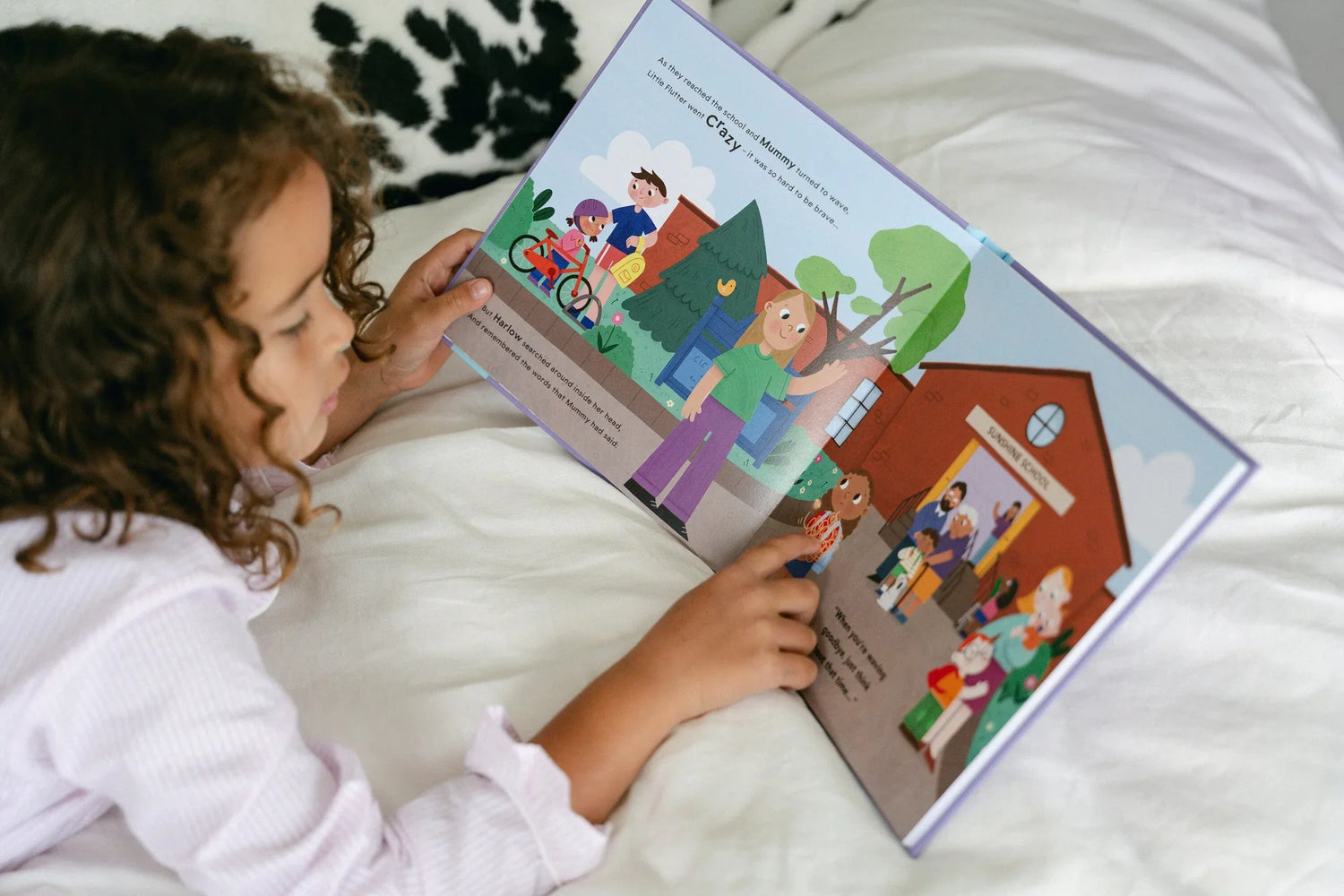
How to Encourage Kids to Read All Year
Book Week arrives each August and classrooms fill with costumes, discussions, and a collective excitement about books. Then the week ends. The displays come down. The routine clicks back into place.
The spark from that week is worth holding on to.
Reading habits children build at home last well beyond any single week of school events. The aim is not a structured reading programme carved out of an already full schedule. It is making books a natural part of ordinary life — small moments that build on each other, week after week, all year.
Start with the shelf, not the schedule
Children read more when books are within reach. A low shelf in the living room and a small stack next to their bed feel like options, not obligations. You do not need a curated library. You need books in the places your child already spends time.
When a child can reach a book without asking, reading becomes something they choose. That shift from external requirement to personal choice is how reading habits children carry for years take root. Access is one of the most overlooked ways to encourage kids to read at home, and it costs almost nothing to arrange.
She started carrying the same book to the bath every night for a month. We never asked her to. It was there and she picked it up.
Books in the car door pocket, on the kitchen table, within reach of wherever your child tends to settle — none of this needs to be tidy or deliberate. The proximity does the work.
Match the book to where they are right now
A three-year-old who loves dinosaurs needs dinosaur books. A six-year-old who will not sit still for a picture book might love a page-a-night chapter book. Following your child's interest is the most practical way to encourage kids to read with any consistency. Interest builds the habit, and the habit builds vocabulary and comprehension over time.
For toddlers, a book that features their own name changes the dynamic entirely. A child who spots their name on page one leans in. They want to know what happens next, because the story is about them. Personalised books for toddlers tend to become the ones carried from room to room, the ones requested for the fifth night in a row, until the pages are soft from handling.
The key is following their lead rather than yours. A child given books about what they care about right now is a child who reads. Their tastes will broaden — and that broadening comes from reading, not from being handed books above their current interest.
Read together, even after they can read alone
Once children can decode words on a page, many parents step back from reading aloud. Shared reading still matters at this stage.
Pausing to talk about what is happening on the page, asking what might come next — these conversations build vocabulary and comprehension faster than silent reading alone at the same age. The discussion is the scaffold. It gives children the language to make sense of what they are reading and the habits of attention that make complex books approachable as they grow.
Did you know?
According to reading researchers, the conversation that happens during shared reading — pausing to wonder aloud, asking questions — develops vocabulary and comprehension faster than silent reading alone. The discussion is as valuable as the text itself.
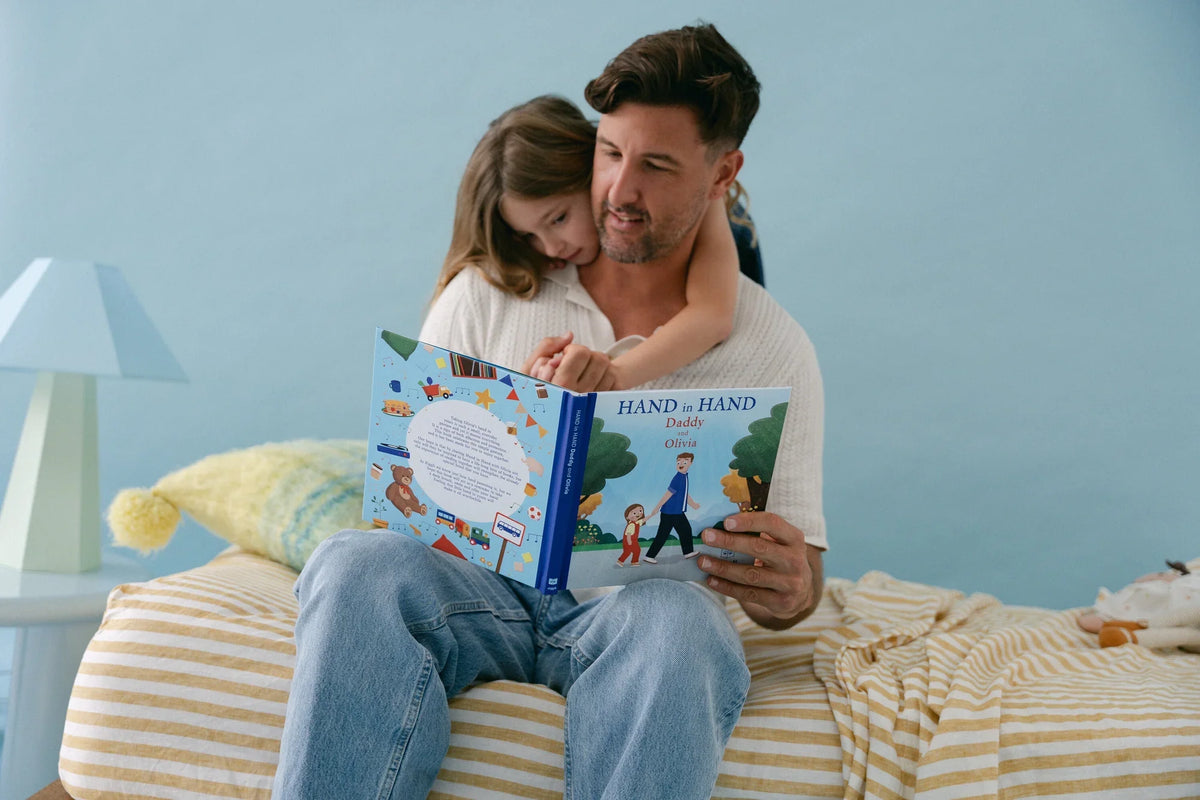
Reading aloud together also removes the pressure of performance. The story belongs to both of you. A child who feels that reading is safe and shared is one who chooses books outside of required moments.
Keep personalised books in the regular rotation
A personalised book carries a different pull. Your child's name on the cover. Their face in the illustrations. The story built around the specific people they love.
A Love Story and My Hero both put your child at the centre — named, pictured, woven into every page. Books like these tend to become the ones children carry from room to room and ask for at bedtime until the spine gives out.
He stopped at his name every single time. Even after we had read the book twenty times. He would tap the page and look up like he was checking we had noticed it too.
Natalia Kucirkova, a professor at Norway's University of Stavanger who researches personalised learning, found that children show greater engagement and better story recall with books featuring their own name. That attachment builds reading habits children carry well into their school years.
The research on how personalised books shape early literacy is explored in our post on personalised books and early literacy development.
Build the habit around what already happens
The most durable reading habits children develop are the ones attached to existing routines. Reading anchored to something already reliable — like bedtime or the morning before school — asks nothing extra of the day.
Bedtime is the anchor most families reach for. A consistent bedtime reading routine, even ten minutes, tells a child's nervous system that the day is winding down and the story is what comes next. Children learn to expect it. They start asking for it before you reach for the book.
Breakfast is another option worth trying. Prop a book open at the table before anyone sits down. Leave a comic within reach of the cereal bowls. Small repeated moments are what keep kids reading through all the competing pulls on a child's attention. Frequency matters more than duration.
A practical tip.
Pick one moment in your day that already runs smoothly — the ten minutes before school, the wind-down after dinner, the car trip to activities. Attach reading to that moment, and it becomes part of the rhythm rather than an addition to it.
Let them see you read
Children follow what they observe more than what they are told. A child who sees the adults around them read for pleasure gets a clear message: books are what people choose when they have time to themselves.
A few minutes on the couch with a novel or magazine is enough. The sight of it registers. Children who grow up watching adults read for pleasure carry that image with them, into their own reading choices and their own quiet moments.
She asked me what I was reading. I showed her the cover and told her a bit about the story. She sat next to me for a while. She did not pick up her own book. She wanted to be near mine.
You do not need to make a lesson of it. Picking up a book for yourself is enough.
Keeping the Book Week momentum going
Book Week in Australia runs 22 to 28 August each year. The theme for 2026 is Symphony of Stories. Schools celebrate with dress-up days and library events, and the excitement in a classroom during Book Week is genuine and worth extending past Friday afternoon.
The easiest extension is a new book. One chosen with your child, not selected and handed over. Something that lands them in a world they want to stay in. A personalised book with their name and face inside gives them something with a particular pull — a story where they are the main character, on every page.
That is how children build a love of reading that lasts. One book, then the next. One habit, then another. A spark from one week in August, tended, can carry the whole year.
Start building their reading life
A personalised book with their name and face inside gives them a story they will reach for night after night.
Build their library

Leave a comment
This site is protected by hCaptcha and the hCaptcha Privacy Policy and Terms of Service apply.