
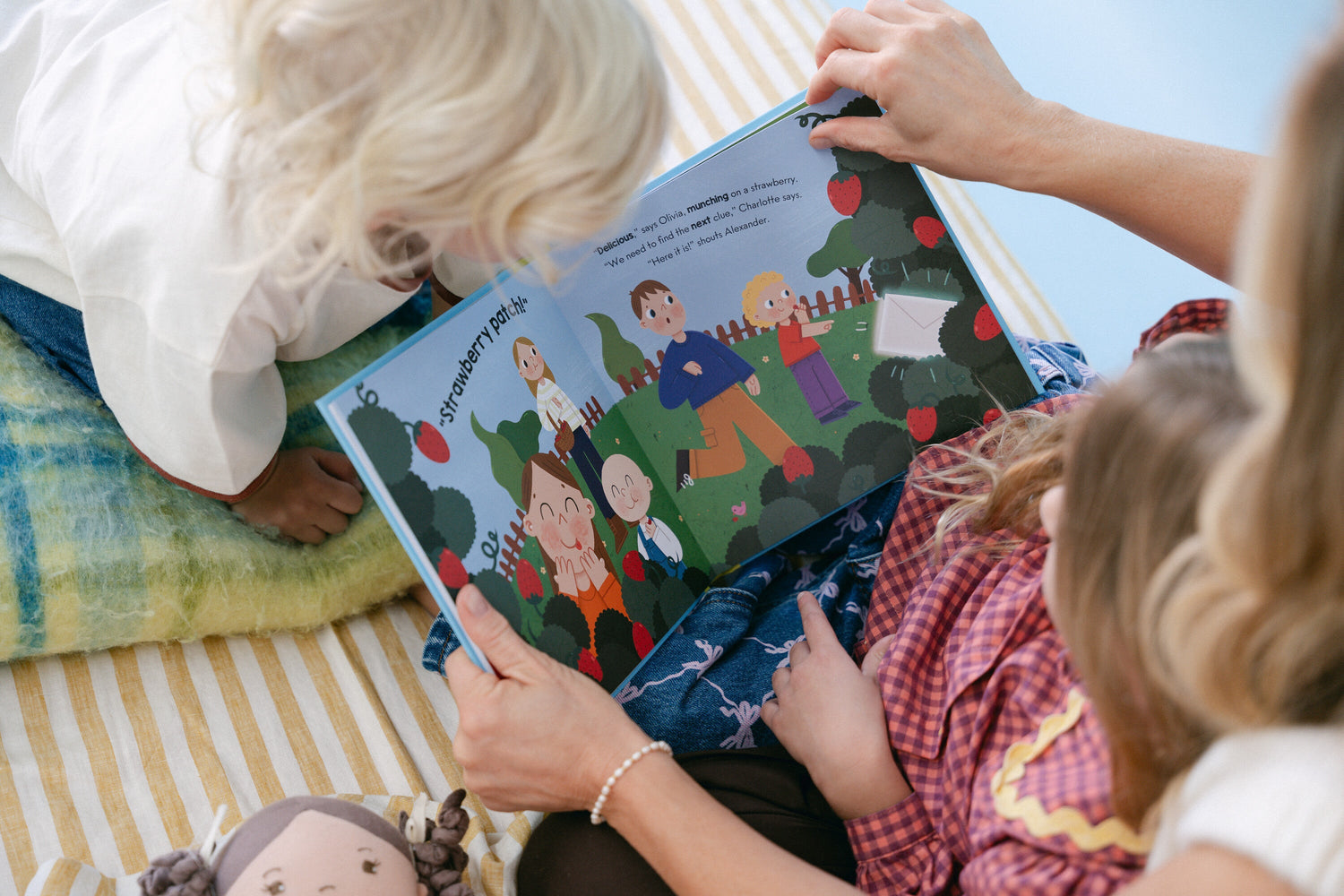
The five minutes that become the whole day
Your child has had a big day. The kind with scraped knees and snack arguments and a moment on the playground they haven't told you about yet. And now you are here, at the edge of their bed, holding a book.
This is where the day settles.
A strong bedtime reading routine does more than calm a child before sleep. The American Academy of Pediatrics links regular shared reading with richer vocabulary, stronger attention, and a bond between parent and child that deepens with each book. The key is consistency. Every night, or close to it.
You don't need a perfect reading nook or a curated library. You need a routine and patience while the habit forms. This guide walks you through building one that sticks, the kind your child will ask for by name on the nights you forget.
Step 1: Set up the space
The space matters more than you might expect. A child who associates a particular lamp and blanket with bedtime stories will begin to feel sleepy before you have opened the cover. The body learns cues the way it learns anything. Through repetition.
Pick one spot and keep it. A corner of the bed, or a chair that fits you both. Keep the light soft and the room cooler than the rest of the house. Phones stay out of reach for the reading portion.
Dim the light before you begin. This tells the brain that winding down has started. The light change is the cue, as much as the story itself.
If you share bedtime between two children, this still works. One child reads with you first while the other looks at books independently nearby. Then you swap. The structure holds even when the logistics shift.
Step 2: Pick a time and hold it
Timing a bedtime reading routine is about rhythm, not the clock. After bath, after teeth, before the lights go out. The order matters more than the exact hour.
Children's bodies run on predictable patterns. Once your child connects pyjamas and books with sleep, they begin to drop into a calmer state during the reading itself. You are training the nervous system. The story is the vehicle.
The science behind the ritual
A 2019 study published in Pediatrics found that children in regular shared reading programmes showed improved communication skills and reduced hyperactivity within four weeks. The routine itself, not the books alone, drove the change.
If you miss a night, carry on the next evening. One skipped night doesn't break a routine that has been building for months. The habit lives in the repetition over time, not in a perfect streak.
Step 3: Match the books to their age
For toddlers and children under four, two short board books works well. One familiar title they can predict and one they haven't heard yet. Familiar books meet the comfort need. New books feed curiosity.
For children five and older, a chapter book read in instalments changes the dynamic. Two chapters a night builds enough anticipation to pull them back tomorrow. You'll hear about it at dinner. That is a bedtime reading routine that has taken root.
The length of the session matters less than the habit. Ten minutes every night outperforms forty minutes on weekends. The signal is what you are after, and signals are built from frequency.
Step 4: Let your child choose
The fastest way to get a toddler invested in a reading routine is to give them a say. Offer two options from the shelf and let them pick. The book they choose feels like theirs. They will ask for it again.
Reading the same book twenty times is not failure. Repetition is how children absorb language. Each re-read surfaces something new, a word that clicked, a detail in the illustration they hadn't caught before.
There is a particular kind of tired that settles in after the fifth read of the same story in a week. And then one night your child recites a line before you say it, voice lit with pride, and you understand why you kept going.
If they insist on the same book for two weeks running, go with it. That book is doing something for them. The job is to stay in the chair beside them and keep reading.
Step 5: Talk during the book, not after
Pause on a page and ask what your child thinks will happen next. Name the emotions on the characters' faces. Point to a detail in the illustration and wait for them to find it too.
Children who hear adults name what they see in pictures, and not read the printed words alone, build stronger comprehension and vocabulary than children who listen without interaction, according to researcher Dr Adriana Bus at Leiden University.
You don't need to make it formal. A raised eyebrow at the right moment. A quiet "uh oh" when the character makes the wrong choice. The conversation follows.
Step 6: Add a book with their name inside
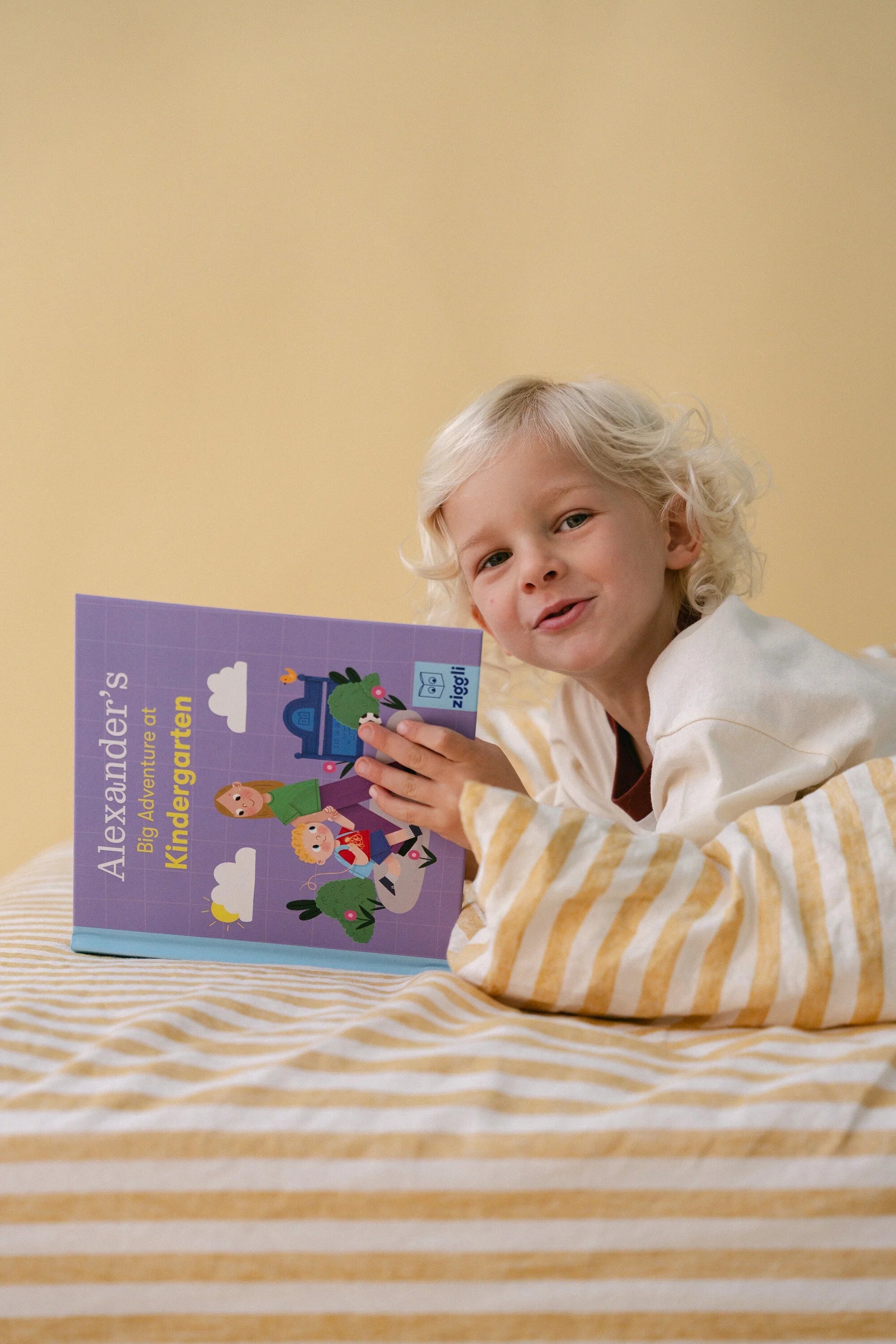
Somewhere in the rotation, include a book where your child's name and family appear on the page.
Children who spot their own name in a story lean forward. They check each page. They ask for it again. The story features them, and that is the pull. Researcher Natalia Kucirkova has documented this heightened engagement across toddler and early primary age groups, and the effect holds regardless of reading ability.
At Ziggli, you build a personalised children's book using the online customiser. You choose the names and details that fit your family. The result is a story your child recognises as their own. Research explains why children respond to seeing themselves in stories, and the bedtime reaction makes it concrete.
A personalised book belongs in the routine
Familiarity is the whole point of a bedtime reading routine. A personalised book puts your child's name on the page and their family in the story. Something made for them, reached for night after night.
Step 7: Close the same way, every night
End the reading the same way each night. A kiss on the forehead. The same words before the light goes off. This closing ritual signals that sleep has arrived.
Children thrive on predictability. The routine becomes comforting over months, not weeks. The closing words feel less like instruction and more like the warmth you have been building, book by book, since the beginning.
The routine you build now, with the lamp and your voice beside them, becomes the thing they carry. Long after the words of the stories have faded, they remember reading with you.
When the routine hits a rough patch
Every bedtime reading routine goes through a stretch where it stops working. A new sibling, a late dinner, a fortnight of overtired evenings where nobody has the patience for three pages.
This is not the end of the habit. It is a pause.
A shortened version still counts. Two pages and a goodnight lands the signal even when you can't read the whole story. Coming back to the routine after a break is easier than building it from scratch, because the body remembers. The lamp goes on, the book comes out, and something in your child's nervous system recognises the sequence. That recognition is what you built. It doesn't disappear in a week.
Their story starts with you
Build a personalised book your child will reach for night after night.
Start with a personalised bedtime story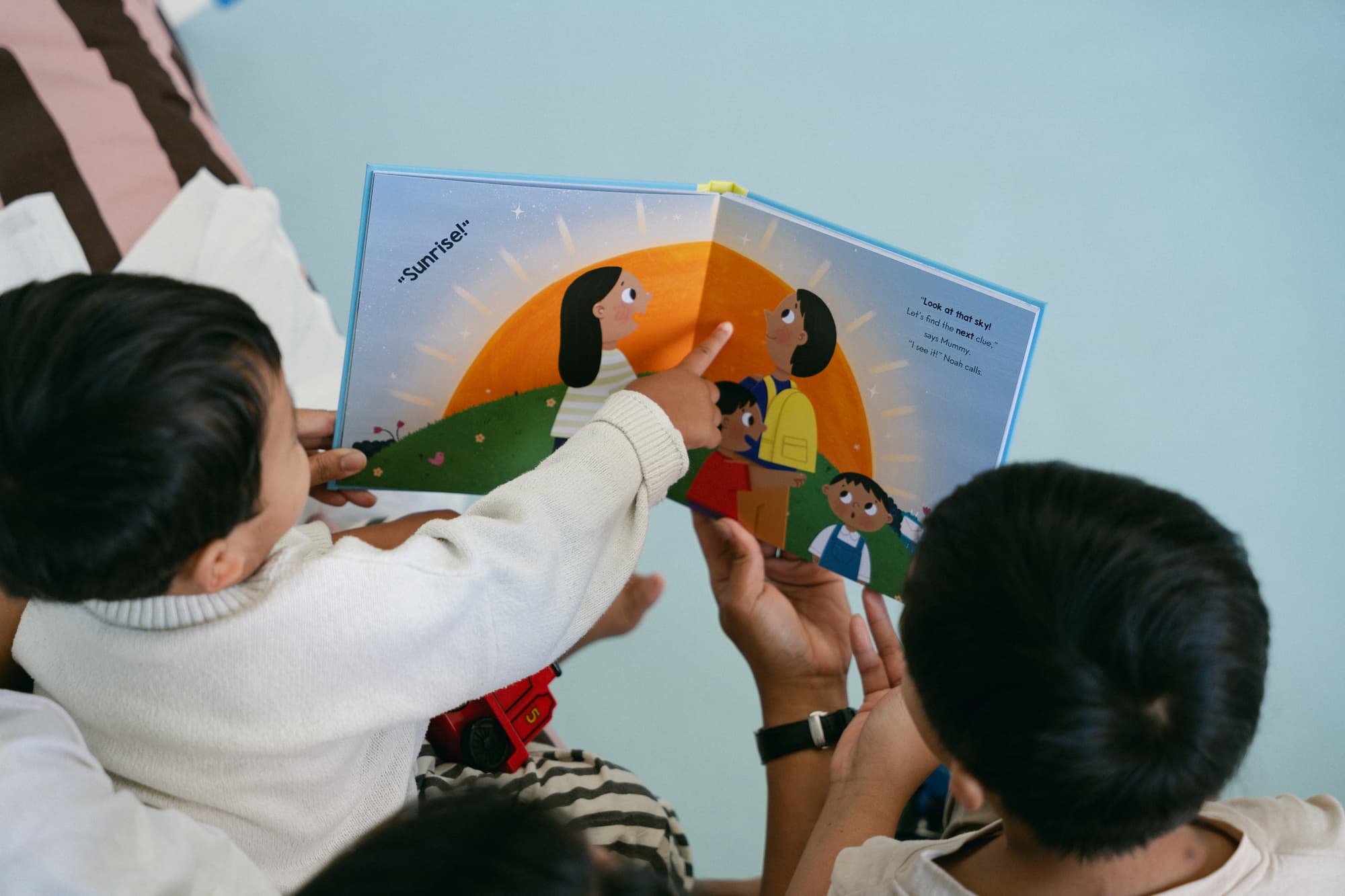

Leave a comment
This site is protected by hCaptcha and the hCaptcha Privacy Policy and Terms of Service apply.