
The morning is coming
Somewhere on the calendar there is a date circled in your mind. The first day of school. For your child it might feel far away, or it might be all they talk about. For you it probably feels like both at once, too soon and somehow overdue.
Preparing your child for starting school is as much about you as it is about them. The uniform hanging on the door. The school bag packed and repacked. The feeling that the little years are ticking past while you watch.
This guide covers the weeks and days before that morning. The slow, patient work of getting a child ready, not for a test, but for a new world opening up in front of them.
School readiness is not what most people think
School readiness gets talked about as if it's a checklist. Can they hold a pencil? Can they count to twenty? Can they sit still for ten minutes?
These things matter. And they matter less than most parents expect. Teachers across Australia are trained to meet children where they are academically. The skills that smooth the transition are social and emotional.
Can your child ask for help from an adult they don't know well? Can they manage their feelings when things don't go their way? Can they read the mood of the children around them and take turns? These are the things that make the first weeks of school hard or manageable, according to the Australian Institute of Family Studies, which tracks school readiness outcomes across early childhood cohorts.
What the data says
The Australian Early Development Census finds that around 22% of Australian children arrive at school with developmental vulnerabilities in at least one area. The domains most linked to long-term outcomes are social competence and emotional maturity, not literacy or numeracy at entry.
The weeks before: building familiarity
Preparing your child for starting school in Australia means working with the school calendar. Most states begin in late January or early February, and several states including Queensland also offer mid-year entries. Wherever you are, the work below applies in the weeks before that first morning.
Practise the morning sequence now. Wake up at school time. Get dressed in a reasonable window. Eat breakfast together, then walk or drive the route to school. Do this on a non-school day so there is no pressure, only the sequence itself. By the first morning, that sequence will feel familiar in the body, not just the mind.
Let them pack the bag themselves. Show your child what goes in and where it goes. Then step back and let them do it. The act of packing builds ownership. The bag becomes theirs, and that matters when they are handed into a world you can't enter with them.
The night before school, your child lays out their uniform on the chair and checks the bag for the third time. They are nervous. They are also proud. That combination is the beginning of brave.
Talking to your child about school
The conversations you have in the weeks before matter more than the one you have on the drive there. Children process big transitions over many small chats, not in a single long talk.
Keep your language honest and warm. School will have hard moments, and it's fine to say so. "Some days will feel tricky. And there will also be days you won't want to leave." Both things are true, and children who hear both tend to trust the reassurance more than children who are only told it will be wonderful.
Ask your child what they are looking forward to. Then ask what they are wondering about. These are different questions, and they open different conversations. The wondering question tends to surface the worry underneath, and worries named out loud shrink.
Avoid loading your own anxiety into the conversation. Children read the room. If you are afraid, they will feel afraid. If you are curious and steady, they borrow that steadiness.
Visit the school before the first day
Familiarity lowers anxiety. The unknown frightens children more than the actual thing, and the actual thing is usually fine once they're in it. Most Australian schools run orientation sessions or transition programmes in the term before school starts. Go to every session you can.
When you visit, walk through the toilets, the lunch area, and the classroom door together. These are the places children most often feel uncertain on day one. Knowing where the bathrooms are is not a small thing for a five-year-old. It is enormous.
Some families also visit the school gate on weekend mornings when the playground is empty. Your child runs around the space without 300 other children in it. By the time the first bell rings, the ground under their feet already feels like somewhere they have been.
Starting school anxiety: what's normal and what helps
Most children feel some version of starting school anxiety in the days or weeks before. Big feelings show up in different ways. Trouble sleeping. Clinging at drop-off. Tummy aches that appear on school mornings and vanish on weekends.
These responses are the nervous system doing its job. School is a genuinely new environment with new rules, new faces, and a long separation from the people your child trusts most. Some anxiety is appropriate. It passes for most children within the first few weeks once the routine becomes familiar.
When to talk to someone
Around 40% of Australian children show some degree of separation anxiety when starting school, according to research published in the Australian Journal of Guidance and Counselling. This is a normal part of the transition. If anxiety is severe or persists well past the first month, your child's GP or school counsellor is the right starting point.
You can read our guide to easing first-day-of-school nerves for practical strategies to use in the days before and on the morning itself.
Put something personal in the bag
The school bag goes with your child into a world you won't see. A small piece of home in that bag matters.
A photo of the family tucked inside the front pocket. A note in the lunchbox. A book they know by heart, with their own name on the page.
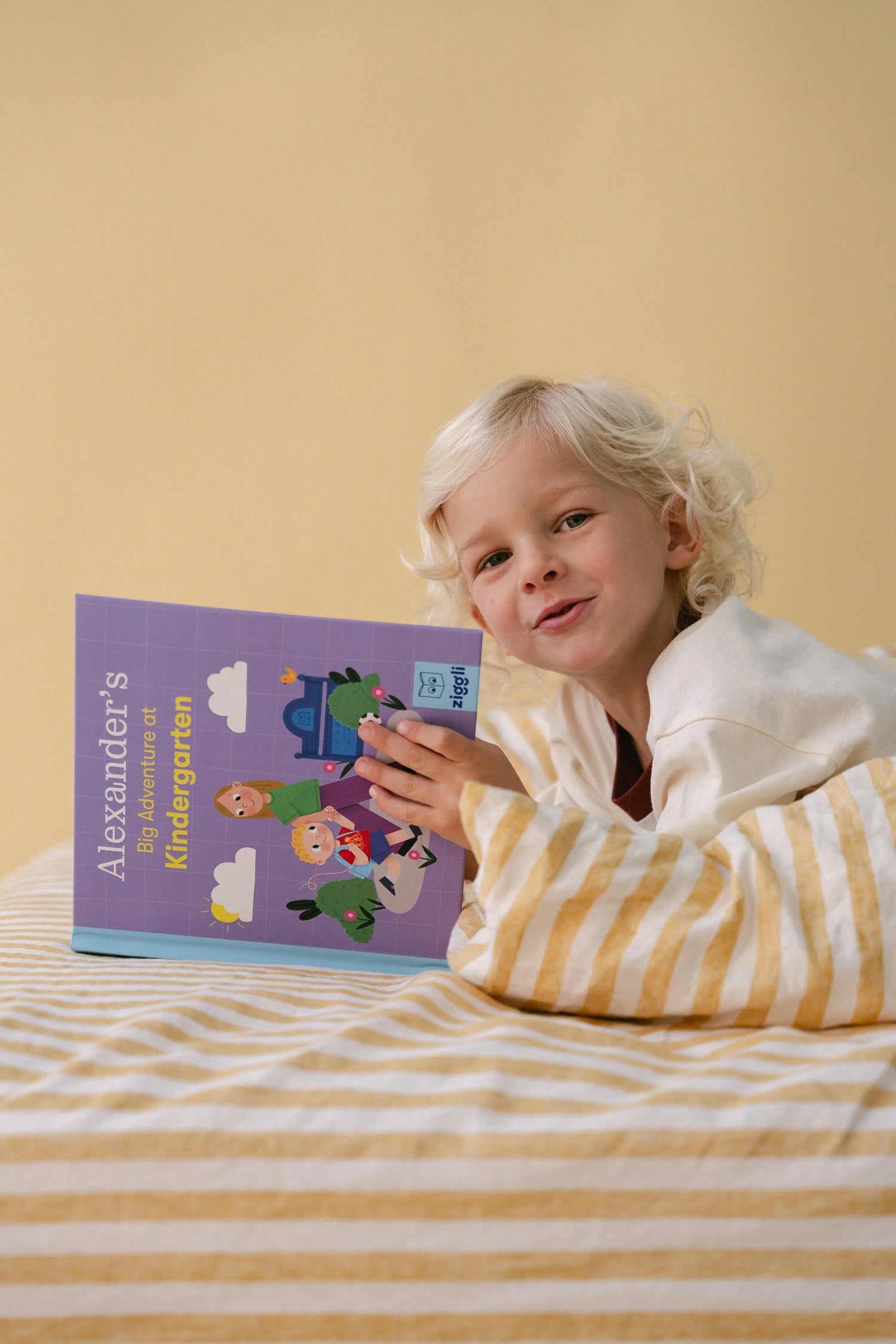
Ziggli's Big Adventure is a personalised book built around your child's first day. You use the online customiser to add their name, their teacher's name, and the names of the people cheering them on. The story walks through a first day and arrives at the kind of ending that feels like a long exhale. Reading it together the night before gives your child a version of the day to hold on to before it has happened.
A book with their name in it, tucked into the front pocket, says something that a parent can't say at the gate: you were thought of, you were prepared for, this day was made with you in mind.
The morning itself
Give yourself more time than you think you need. A calm, unhurried morning is worth waking up thirty minutes earlier. Rushing out the door raises cortisol in children and parents alike, and a rattled child at the gate takes longer to settle in the classroom.
Say goodbye at the gate with confidence and warmth. A short goodbye, said with a smile, is kinder than a long and tearful one. Your child reads your face more than your words. If your face says "you've got this," they believe it.
You walk away from the gate and something catches in your throat. You have done the preparation. You have built the confidence and packed the bag and read the stories. The rest is theirs now. And that is how it is meant to go.
Preparing your child for starting school is not a single act. It is the accumulation of small, steady things over weeks and months. The conversations at dinner. The practice mornings. The books you read in the lamp-lit corner of their room. By the time the first bell rings, your child carries all of it with them.
Give them a story to carry in
Big Adventure is a personalised book about their big day. Their name, their world, their first brave step.
Explore Big Adventure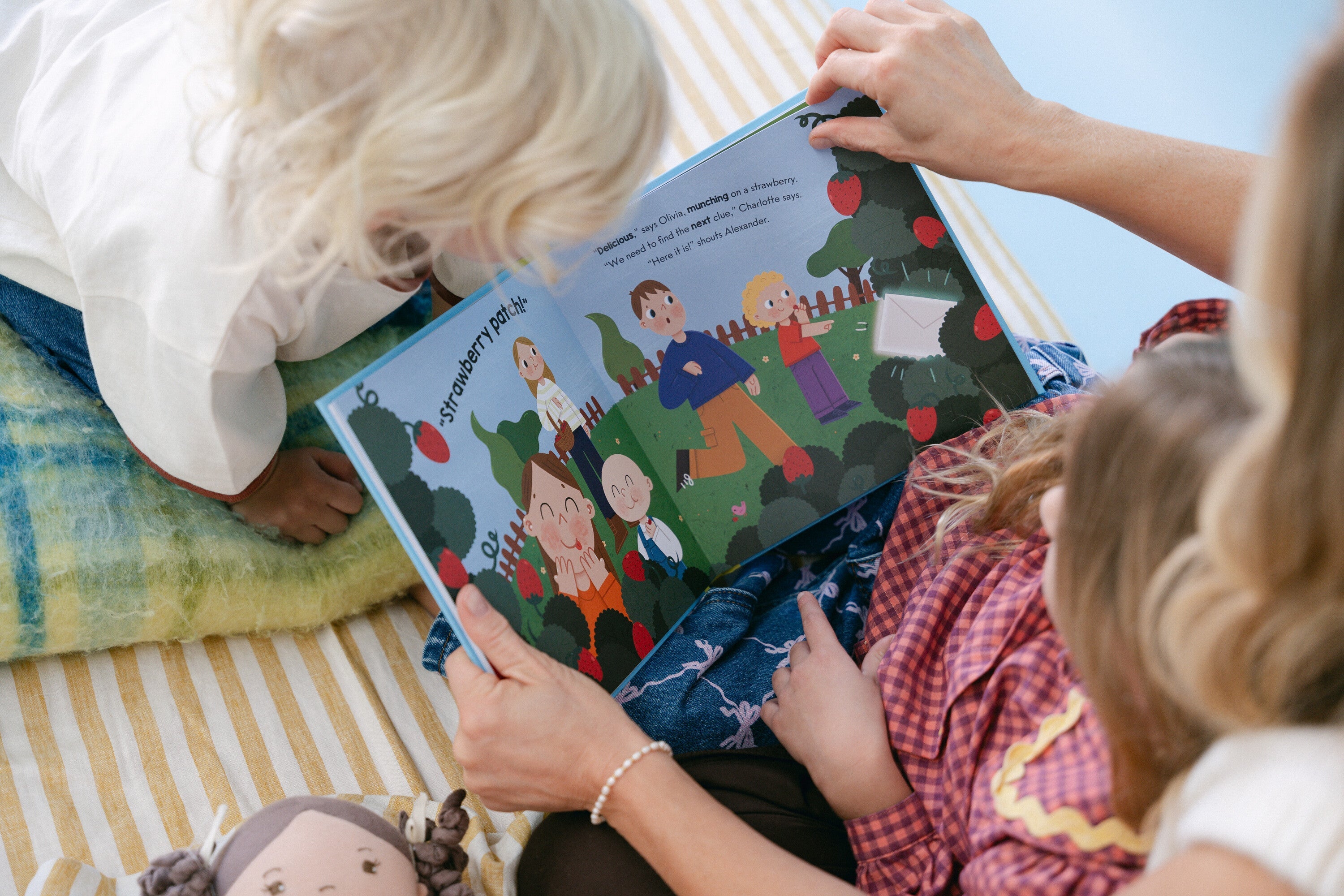

Leave a comment
This site is protected by hCaptcha and the hCaptcha Privacy Policy and Terms of Service apply.